Accelerating Production at Toyota: The Impact of PostProcess BASE and DEMI 4100

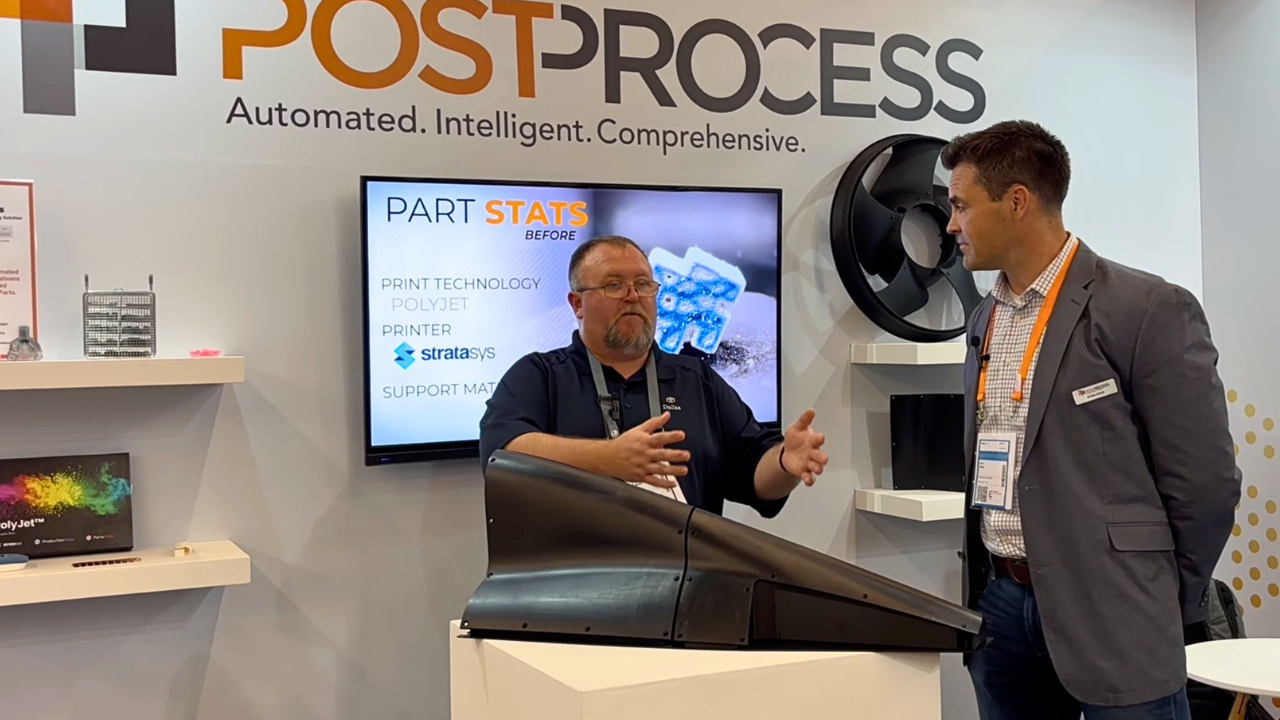
ehs-blogAt Toyota Production Engineering, Additive Manufacturing Engineer Dallas Martin and his team bridge the gap between design and manufacturing. They’re responsible for developing the fixtures, jigs, and supporting processes that help move programs from concept into production and keep assembly running smoothly.

With a lean team supporting high-throughput work within the additive facility, automation plays an important role in helping them keep pace and stay efficient.

To overhaul their post-printing workflows, Toyota adopted the PostProcess BASE and DEMI 4100 systems. Here is a look at how these automated solutions are transforming their operations.

Slashing FDM Processing Times with the BASE

Toyota utilizes Fused Deposition Modeling (FDM) extensively, operating a fleet of over 18 large-format FDM machines. However, their traditional post-processing step became a massive bottleneck. Previously, parts had to be washed in a dunk tank, placed out on a rack to dry, and then operators had to manually remove the excess SR30 support material. This workflow relied heavily on manual labor and oftentimes, took up to 48 hours to complete.

Integrating the PostProcess BASE FDM Support Removal Solution was described as a “home run” for the team. Automating the support removal step with the BASE solution drastically cut down turnaround times for the team.

“What used to take two days is now completed in just 15 minutes for small parts and 45 minutes for larger parts,” said Martin.

This significant improvement in efficiency allows engineers to receive parts faster, helping accelerate both prototyping and overall production timelines.

Safer, Automated SLA Resin Removal with the DEMI 4100

For Stereolithography (SLA) applications, Toyota utilizes large-format Stratasys Neo800 printers to handle substantial part sizes that are often required in automotive manufacturing. However, SLA post-processing posed a unique safety challenge – Toyota’s facility had strict safety regulations regarding flammable substances often used in conventional post-processing methods.

“We had to look for a solution that was a lot safer but was also automated,” said Martin.

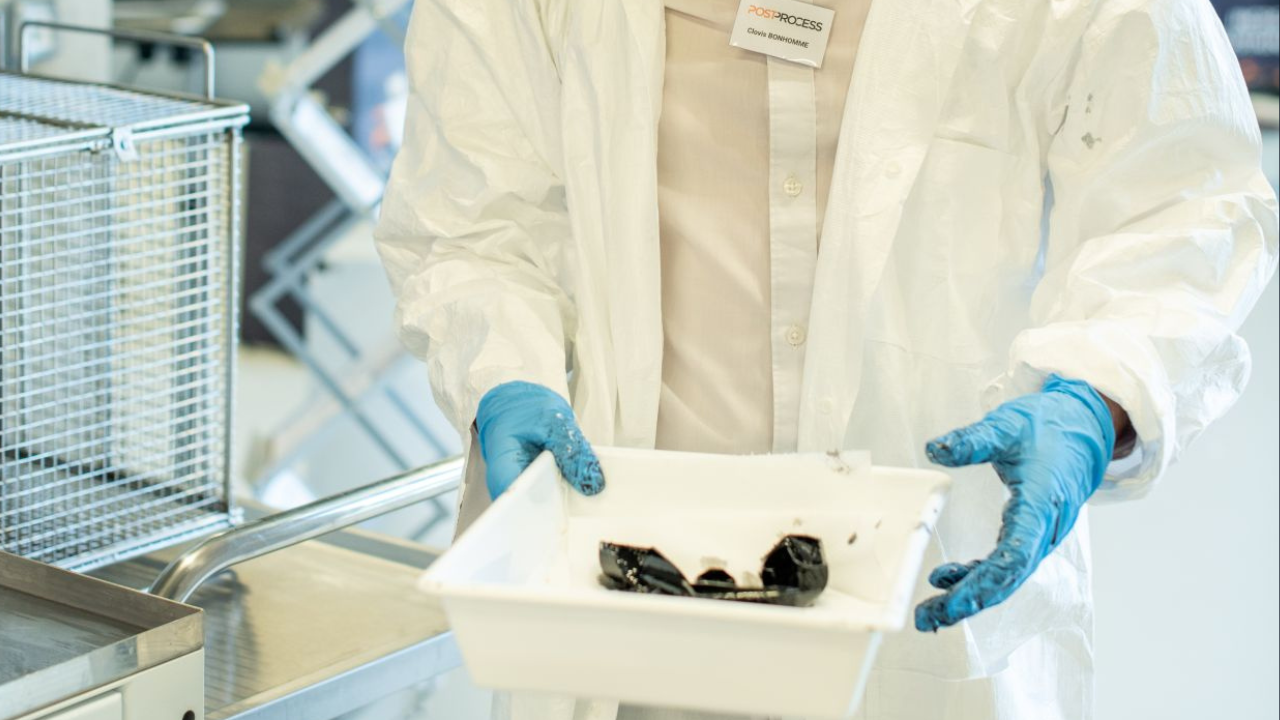
Toyota turned to the PostProcess DEMI 4100 Resin Cleaning Solution to meet their safety requirements without sacrificing throughput. The system provided an automated, safer approach to resin removal that aligned with the facility’s operational standards.

Seamless Integration and Commonality

One of the standout benefits of running both the BASE and DEMI 4100 is the synergy between the two systems. Both machines utilize the exact same software interface, which creates a common process flow between FDM and SLA.

For Toyota’s operators, this commonality is a game-changer. It means less operational training and easier cross-training, as users don’t have to constantly switch between different controllers or memorize entirely different operating settings.

By adopting automated post-processing, Toyota Production Engineering continues to stay highly competitive and keep cutting-edge innovations moving quickly.

To hear more about Toyota’s experience with PostProcess, watch the full interview with Dallas Martin on our YouTube channel: Toyota Customer Testimonial | PostProcess BASE & DEMI 4100.

EH&S in Additive Manufacturing: Safer Post-Processing for Scalable Production

Environmental, health, and safety (EH&S) are three priorities discussed at the forefront of manufacturing, but what do they really mean for today’s additive workflows?

As additive manufacturing scales, workplace safety is becoming a critical focus, particularly within post-processing operations. From chemical handling to manual part cleaning, these steps introduce risks that can impact not only operators but also overall efficiency, compliance, and scalability.

For many manufacturers, improving post-processing isn’t just about speed or part quality – it’s about building safer, more sustainable, and production-ready workflows.

The Reality & Risks of Manual Post-Processing

Post-processing is essential in additive workflows in order to transform printed parts into finished components. However, many traditional post-printing workflows still rely on manual handling and hazardous chemicals, creating a range of environmental, health, and safety concerns.

Common challenges include:

  • Flammable solvents: Isopropyl alcohol (IPA), commonly used in resin cleaning, has a low flashpoint and requires careful handling, storage, and ventilation.
  • Operator exposure: Open containers increase the risk of splashing, skin contact, and vapor inhalation, often requiring extensive PPE.
  • Manual handling: Repetitive, hands-on cleaning can lead to fatigue, inconsistency, and a higher likelihood of error.
  • Chemical management: Solutions like sodium hydroxide require strict controls and disposal procedures.
  • Regulatory compliance: Facilities must manage ventilation, storage, and documentation to remain compliant.

These issues have already resulted in workplace accidents, forcing organizations to move away from open dunk tanks and high-risk solvents and to ban these processes in favor of safer alternatives.

A Shift Toward Safer, Scalable Workflows

ehs-blogAs these challenges and risks become more apparent in day-to-day operations, additive manufacturers are seeking alternatives to traditional post-processing methods. As a critical step in producing production-ready parts, post-processing must be both safe and scalable.

This shift is driving demand for solutions that not only improve efficiency but also reduce operator risk, limit chemical exposure, and deliver more controlled, consistent results.

Moving Toward Automated and Controlled Post-Processing

Automated post-processing solutions from PostProcess are designed to improve both safety and consistency, while also:

  • Reducing chemical exposure with enclosed, hands-free operation
  • Eliminating flammable solvents by replacing IPA with safer detergents
  • Improving consistency through software-driven, repeatable cycles and recipe storage
  • Enhancing workplace safety with enclosed systems, interlocks, and controlled environments
  • Supporting sustainability goals by reducing waste and extending detergent life

Together, these capabilities create a more controlled, reliable, and consistent post-processing workflow.

The Bigger Picture

Organizations that prioritize EH&S in post-processing are better equipped to grow production, reduce hazardous chemical use, and simplify compliance – while creating safer, more efficient operations.

In today’s additive manufacturing landscape, success isn’t just defined by what you print, it’s defined by how safely and efficiently you finish the part.

Looking ahead, the future of additive manufacturing depends on more than advanced printers and materials. It depends on building end-to-end workflows that are efficient, consistent, and safe.

Want to take a deeper dive into safer, more sustainable post-processing? Download our two-page overview to see how manufacturers are improving EH&S in post-processing today.

Scaling Additive Manufacturing Workflows: Insights & Trends from the 2026 Post-Processing Survey

In additive manufacturing, printing the part is only one piece of the workflow.

The step after the printing—post-processing—often determines whether additive manufacturing can truly scale and step into real production environments.
2026-survey

To better understand how the industry is navigating this, the 2026 Additive Post-Processing Survey: Trends Report, conducted by PostProcess Technologies, gathers insights from additive professionals across industries including aerospace, automotive, medical, defense, and general manufacturing.

Now in its fifth year, the survey highlights trends and challenges in post-processing as companies look to scale production, manage costs, and improve part quality. However, one insight is clear throughout: post-processing is one of the most critical steps in the additive manufacturing workflow.

Rethinking Traditional Post-Processing Methods

Turning a printed part into a finished component requires multiple steps. Depending on the printing technology, that may include support removal, resin cleaning, powder removal, or surface finishing.

While these steps are essential, they can also introduce challenges when production volumes increase.

According to survey respondents, the time and labor required to finish parts remains one of the biggest obstacles when scaling additive manufacturing operations. Many organizations still rely on traditional and manual processes that slow throughput, introduce safety risks, and lead to inconsistent results in post-processing workflows.

For manufacturers aiming to scale AM methods, optimizing post-processing with automated, end-to-end solutions is quickly becoming a priority – from design and printing to post-processing and final part readiness.

Safety and Sustainability Are Moving Up the Priority List

The survey also highlights growing attention around operator safety and environmental considerations in post-processing.

Traditional post-processing workflows often involve manual handling of parts and chemical solvents. Companies are taking a closer look at how these processes impact workplace safety, hazardous chemical exposure, flammability risks, and environmental responsibility.

As a result, manufacturers are looking for ways to create cleaner, safer, and more controlled post-processing environments that support long-term production growth.

A More Mature AM Industry Is Looking at the Full Workflow

Another key takeaway from the survey is the growing maturity of additive manufacturing users.

Many respondents report several years of experience working with AM technologies, which is shifting the conversation. Instead of focusing solely on printers or materials, organizations are now evaluating the entire end-to-end additive manufacturing workflow.

This perspective reflects an important reality: success with additive manufacturing isn’t determined by the printer alone. It depends on how efficiently every step of the process works together.

Automated post-processing is proving to be one of the most influential steps in achieving efficient, reliable, and repeatable production.

Looking Ahead

As additive manufacturing continues to expand across industries, manufacturers are placing greater emphasis on adding efficient, scalable post-processing solutions to their workflows.

The insights from the 2026 Additive Post-Processing Survey Trends Report show that organizations are not only recognizing these challenges, but they’re actively working to solve them. The findings offer a valuable look at how the industry is evolving and where post-processing is heading next.

Download the full 2026 Additive Post-Processing Survey Trends Report for an in-depth look at the data redefining additive manufacturing and post-processing workflows.

Looking Back on 2025: A Year of Innovation, Growth & Customer Impact at PostProcess Technologies

As 2025 comes to a close, we’re reflecting on a year defined by innovation, expansion, and meaningful customer success. Across industries, PostProcess Technologies has continued to push the boundaries of what fully automated post-processing can achieve.

This year, we strengthened our global footprint, broadened our product portfolio, and helped customers around the world unlock faster, safer, and more reliable additive manufacturing workflows. Here’s a look back at the highlights that shaped 2025.

Product Launches: Expanding the Future of Automated Post-Processing

In 2025, we introduced powerful new solutions designed to streamline resin removal, optimize PolyJet workflows, and enhance high-volume industrial production.

DEMI X 200 Plus
An all-in-one automated system for SLA and DLP workflows, the DEMI X 200 Plus integrates cleaning, rinsing, drying, and curing in one compact footprint. Engineered for dental labs and small-format manufacturing, it delivers customer-ready parts with minimal manual intervention.

DEMI X 520 for Dental PolyJet
Built on our proven DEMI X 520 platform, this solution tackles the challenges of removing support from complex dental PolyJet applications. It delivers fast, repeatable, and safe processing while supporting large batch sizes for high-throughput dental production.

DEMI X 5000
A complete reimagining of the DEMI 4100, the DEMI X 5000 introduces dual agitation flow, adjustable tilt, simplified loading, improved process sealing, and refreshed ergonomics. Tailored for large-format SLA applications, it offers faster, smoother, and more consistent automated resin removal at scale.

DEMI X 520 for Industrial PolyJet
Designed specifically for industrial PolyJet workflows, this full-stack solution provides enhanced speed, safety, and consistency for large batches, helping manufacturers achieve production-ready output at scale.

Strengthening Workflows Through Stratasys Integration

This year, we continued deepening our collaboration with Stratasys, including a highlighted pairing of the Stratasys Neo800+ with the PostProcess DEMI 4100.

Global leaders across automotive, industrial, and service bureau environments reported improved throughput, greater consistency, and enhanced operator safety.

At Toyota Production Engineering, Dallas Martin has integrated both the PostProcess BASE and DEMI 4100 solutions to pair with their Stratasys printers. These systems have become essential to their daily additive manufacturing operations – dramatically reducing FDM drying times from 48 hours to under an hour while improving efficiency, consistency, and overall workflow performance. Watch our video testimonial with Dallas Martin from Toyota Production Engineer on our YouTube channel to learn more –  watch Toyota video here.

“At Stratasys Direct, we’re leveraging the PostProcess DEMI 4100 automated cleaning system alongside the Neo800+ printer to streamline our SLA post-printing workflow,” said Sean Schoonmaker, Director of Operations, Stratasys Direct Manufacturing.

Additionally, this partnership extends across the entire Stratasys portfolio. The F900 and F3300 pair with our BASE solution for FDM post-processing, while the Origin series leverages the DEMI X 520 for Resin Removal. In dental applications, the DentaJet integrates with the DEMI X 520 for Dental PolyJet, delivering automated workflows from print to finished part.

Major Milestones: Growth, Innovation & Industry Insights

As PostProcess continued to scale in 2025, we reached several major milestones that highlight our progress, innovation, and commitment to advancing additive manufacturing.

800+ Solutions Sold Worldwide
PostProcess surpassed 800 solutions soldin April of 2025. PartsToGo accelerated growth in their service bureau operations by purchasing the 800th solution. PartsToGo selected the DEMI 4100 to pair with their fleet of Stratasys NEO Series and J Series printers, enhancing their operational efficiency.

50 Patents and Counting
Our commitment to innovation continued with the addition of new patents – hitting the 50 patent mark and exceeding it as the year progressed. Each patent represents years of research and development dedicated to solving the most complex challenges in additive manufacturing, enabling customers to scale production efficiently, consistently, and safely.

Relaunching the Annual Post-Printing Survey
After a strong run from 2018–2022, we relaunched our industry-leading Post-Printing Survey Hundreds of participants across the additive manufacturing sector contributed their insights into 3D printing and post-processing. The findings and results from the survey will be released in early 2026.

Expanding Our Board of Directors
In April, we welcomed Jonathon Casey to our Board of Directors. As Executive Vice President, Chief Integration Officer, and Chief Supply Chain Officer at Nissha Medical Technologies, Casey brings extensive leadership experience across medical devices, technology, and laboratory operations to support our next phase of growth.

Customer Success Stories: Real Results from Real Workflows

Across industries and applications, PostProcess customers are turning automation into a competitive advantage – delivering measurable improvements in real-world production workflows around the globe.

J.W. Speaker | FDM Support Removal
By pairing the PostProcess BASE™ solution with their Stratasys F3300 in their Wisconsin facility, J.W. Speaker reduced turnaround times by up to 89%, eliminated manual bottlenecks, and achieved $60K–$75K in annual savings, showcasing the transformative impact of intelligent automation.

TEAMZIEREIS | Resin Removal
TEAMZIEREIS transitioned from manual IPA cleaning to automated resin removal with the DEMI 430, increasing safety, elevating productivity, improving part quality, and reinforcing its commitment to sustainable, high-precision dental production in its Engelsbrand, Germany, facility.

Ninety! | PolyJet Support Removal
Ninety!, a premier French dental production center, integrated the DEMI X 520 for Dental PolyJet into its high-volume workflow – processing up to 500 dental models per day with improved speed, consistency, and reliability.

ARTDENTECK | Resin Removal
ARTDENTECK adopted the DEMI 430 to enhance resin removal across its three facilities in France, improving operator safety and driving more consistent, efficient production of dental prosthetics.

We also marked the launch of our new video customer spotlight testimonial series, featuring firsthand insights from partners like Toyota Production Engineering, GoEngineer, and PartsToGo – all now available to watch on our YouTube channel.

Looking Ahead: Building the Future of Post-Processing

As we move into 2026, PostProcess remains focused on advancing post-processing as a critical, value-driven stage of the additive manufacturing workflow – one that continues to gain visibility and impact across the industry.

Thank you to our customers, partners, and team for an extraordinary 2025. Here’s to another year of breakthroughs in automated post-processing. We’re excited for what lies ahead!

Streamlining Dental 3D Printing Production: The Power of Automated Post-Processing

DEMI X 520 Clean Dental PartsIn the rapidly evolving world of dental manufacturing, it’s tempting to fixate on how fast a 3D printer can spit out parts. But as the new piece from PRIMANTE3D highlights, what really determines productivity is the entire workflow – especially those critical post-printing steps.
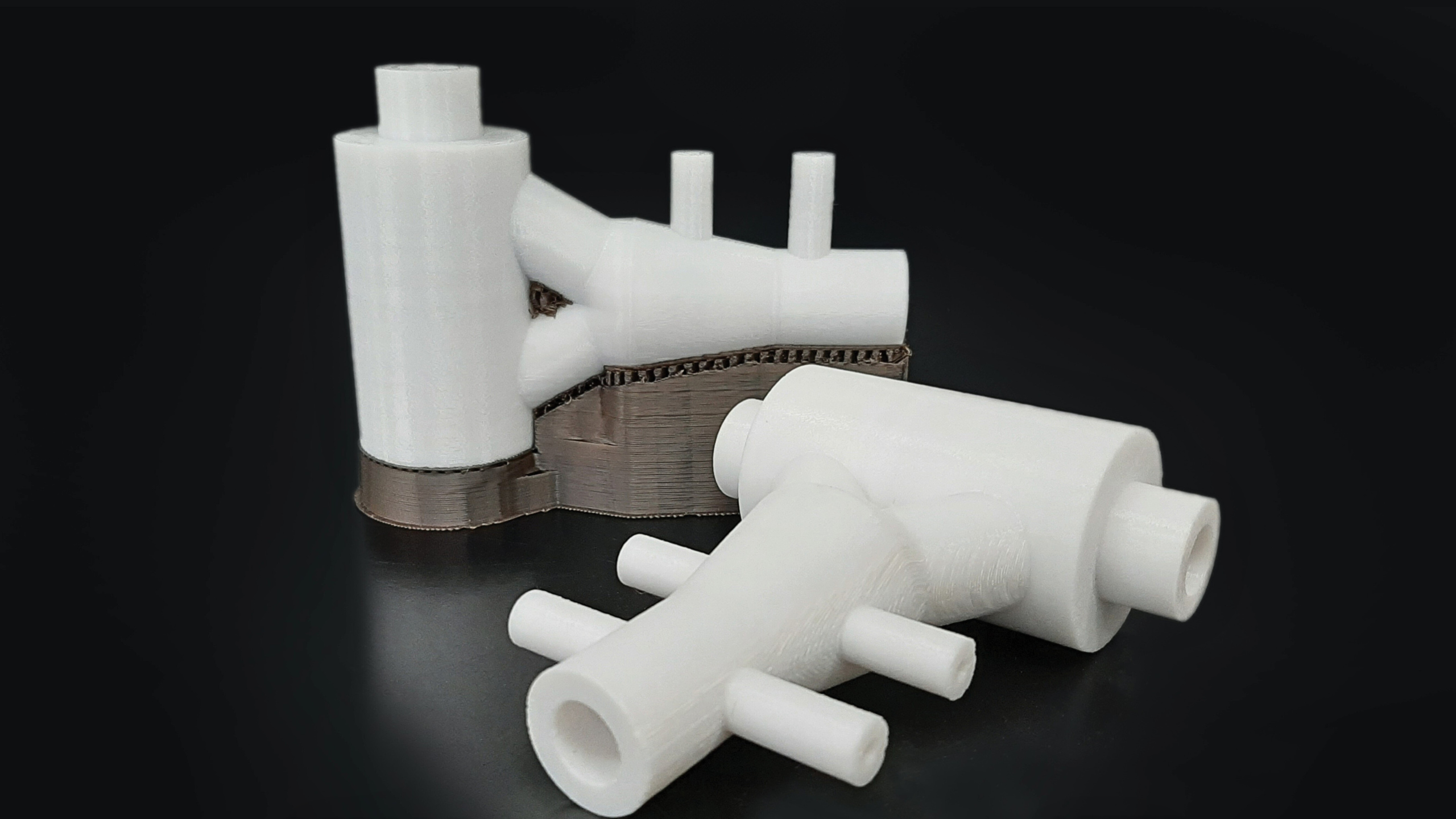
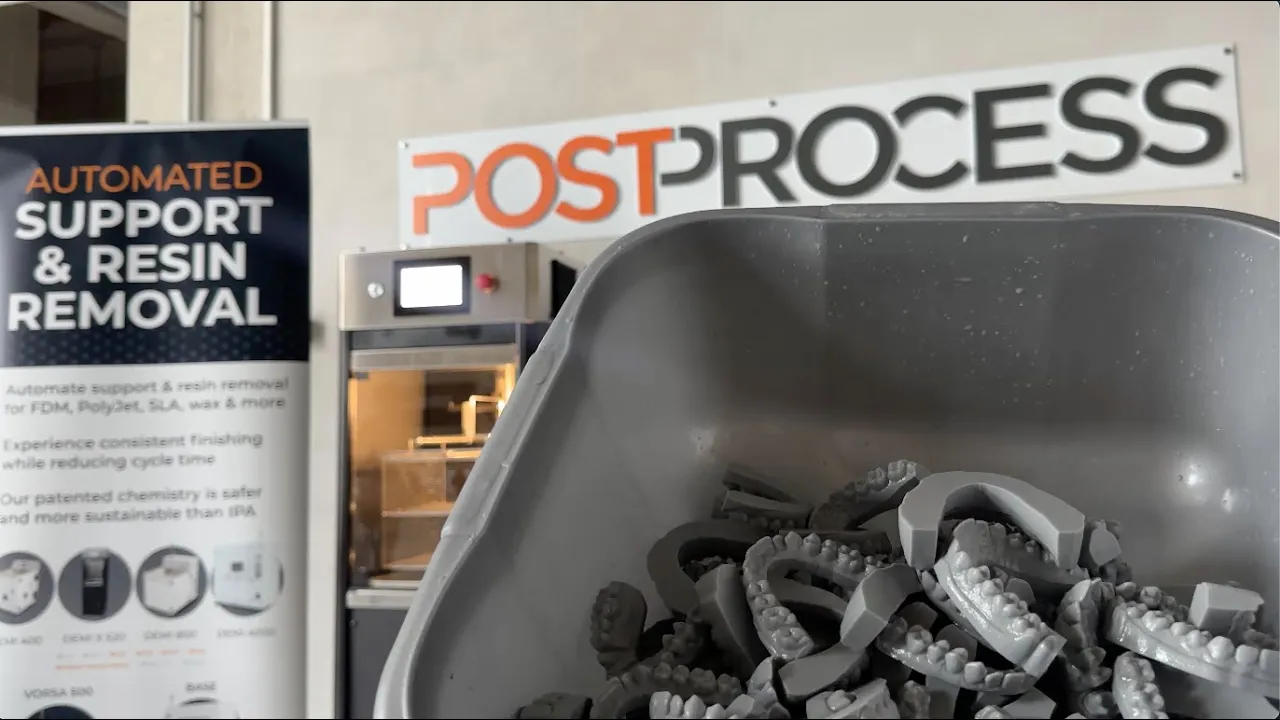
In the latest PRIMANTE3D Dental Segment, Alain Marion, from PostProcess Technologies, was interviewed to talk about the need for an automated, user-friendly post-processing solution that was purpose built for the dental sector.

Why Automation Matters in Dental Post-Processing

For many dental labs, cleaning and finishing 3D printed parts has long been a manual, messy, and time-consuming process. Traditional methods, like isopropyl alcohol baths (IPA), not only limit throughput but also create safety and environmental challenges. Automated post-processing systems from PostProcess eliminates these bottlenecks, delivering consistent, high-quality results at scale.

Key Benefits of Automated PostProcess Solutions

  • Increased Throughput – Automated systems handle large volumes with uniform results, dramatically reducing turnaround time.
  • Superior Consistency – Every part is finished to the same standard, ensuring the precision and quality dental professionals rely on.
  • Reduced Manual Labor – Automation frees technicians from repetitive, labor-intensive tasks, allowing them to focus on higher-value work.
  • Safer, More Sustainable Operations – Eliminate harsh chemicals like IPA to create a safer and cleaner workplace.
  • Innovative Technology for the Future – Systems like the DEMI X 200 Plus and the DEMI X 520 are engineered to scale with evolving resin materials and production demands.

PostProcess Dental Resin Removal Solutions

The DEMI X 520 is a high-volume, IPA-free resin cleaning system ideal for dental applications. With an operator time of just around two minutes and cycle times as fast as ten minutes to clean 150 dental models, it delivers dramatic labor savings with consistent results. This innovative full-stack solution combines cutting-edge technology, intelligent software, and specially formulated chemistry to optimize post-printing workflow, reducing IPA and the need for manual resin cleaning.

Powerful all-in-one dental solution, the DEMI X 200 Plus is designed for smaller-scale dental labs where footprint and space is key. Offering a compact, all-in-one solution for resin removal, the DEMI X 200 Plus consolidates cleaning, rinsing, drying, and curing into a single automated process, delivering finished parts in under 30 minutes. The result is reduced manual handling, improved consistency, and a more streamlined workflow.

A Complete Workflow Advantage

As Alain Marion explains in the article, the true key to productivity isn’t just faster printing – it’s a fully-optimized workflow from print to finished part. That’s why more dental manufacturers are investing in automation that ensures each stage of production delivers speed, safety, and repeatability.

Explore the full story here:

5 Days Around Dental 3D Printing: What post-processing solutions are available for 3D Printed dental devices?

5 Jours Autour de l’impression 3D dentaire : Quelles solutions de post-traitement pour les dispositifs dentaires imprimés en 3D ?

How to Optimize Post-Printing for High-Volume FDM Production

In high-volume FDM production, automated post-printing is a necessity for meeting demand at scale.

We’ve seen firsthand how additive manufacturing has evolved, especially for Fused Deposition Modeling (FDM). And as print volumes increase, one challenge continues to stand in the way of efficiency: manual post-processing.
base-fdm

For facilities running dozens or hundreds of FDM builds per week, traditional methods of support removal are time-consuming, inconsistent, and difficult to scale. Between chemical baths, overnight drying cycles, and intensive manual labor, post-printing can quickly become the biggest bottleneck in your additive workflow.

That’s where automation changes the game.

At PostProcess Technologies, we work with manufacturers every day who are scaling up FDM production with automation, and we’re here to help enhance your workflow.

In this blog, we’ll explore how to streamline FDM post-processing with intelligent, automated solutions that eliminate manual labor, reduce operator intervention, and enable high volume throughput.

Why Traditional Post-Processing Can’t Keep Up

FDM has long been the go-to technology for prototyping and high volume end-use parts. As manufacturers shift toward larger, production-scale volumes, the same tools and methods that worked for traditional post-printing can’t keep up with the growing demands. Manual support removal, whether it’s hand tools, soak tanks, or rinse baths, slow down the entire process.

Technicians spend hours clearing geometry, waiting for parts to dry, or reprocessing components due to inconsistent results. And with labor costs rising, relying on manual intervention is neither sustainable nor scalable. These delays not only limit throughput but also create unpredictable lead times, impacting overall operations.

Intelligent Automation for High-Throughput Workflows

The PostProcess BASE™ solution brings precision, consistency and speed to FDM post-processing. Purpose-built for high-volume FDM production, BASE uses a spray-based technology that eliminates the need for prolonged soaking and overnight drying. It automatically adapts to part geometry and material type to optimize cycle times without sacrificing quality. That means more parts out the door – faster, cleaner, and with less labor.

Key benefits include:

  • Reduced cycle times: Complete support removal in under an hour, with no drying required
  • Labor savings: Hands-off operation with minimal technician oversight
  • Improved consistency: Reliable results regardless of part complexity
  • Scalability: Designed to support multiple builds per day, with no compromise on performance

Built to Complement Industrial FDM Printers

Our solutions are purpose-built to align with the throughput capabilities of many of today’s industrial FDM printers, such as the Stratasys F3300, F900, or Fortus series.

By integrating the BASE into your production environment, you can create a seamless, end-to-end workflow. Instead of slowing down workflows to wait on soak tanks or oven drying, parts can move directly from printer to post-print in a continuous, accelerated process.

Whether you’re producing large-format jigs and fixtures, high-strength production parts, or daily prototype runs, this pairing ensures that your investment in high-end printers is maximized to the fullest.

A Smarter, Scalable Future for FDM

Whether you’re printing 50 or 500 parts a week, automated post-processing can help unlock the full potential of your additive production line. By removing the burden of manual labor and unpredictable cycle times, you free up valuable capacity and create a workflow that’s built for growth.

At PostProcess Technologies, we’re here to support that growth – with an automated solution that’s engineered to meet the demands of high-volume FDM.

Ready to optimize your FDM workflow?

Let’s talk about how automation can accelerate your production goals – contact us today!

High-Accuracy & Efficiency: Streamline Dental Workflows with PostProcess Technologies

In the fast-paced world of dental 3D printing, achieving precision, efficiency, and safety is essential. Traditional post-printing methods can be time-consuming, inconsistent, and expose lab technicians to hazardous chemicals. As dental labs strive for higher throughput and improved safety standards, automation in post-processing has become a game-changer.

The Challenge: Manual Post-Printing Limitations

For years, dental labs have relied on manual methods for post-processing. These manual methods pose risks, such as:

  • Inconsistent results – Manual methods can lead to uneven resin and support removal, affecting part quality and precision.
  • Extended processing times – Technicians spend significant time handling parts, slowing overall productivity.
  • Safety risks – IPA-based cleaning methods pose health and safety risks due to flammability and harmful fumes.
  • High labor costs – Manual post-processing can require hours of manual labor, increasing operational expenses.

An Intuitive, Automated Alternative: Meet PostProcess Solutions for Dental

PostProcess Technologies has developed three solutions created specifically for dental labs. Depending on your lab’s footprint and capabilities, one (or more) of these solutions may be the right fit for your operations:

  • DEMI X 200 Plus
    • An advanced, all-in-one resin cleaning and curing solution designed for SLA and DLP parts. This fully automated system streamlines cleaning, rinsing, drying, and curing to deliver customer-ready 3D-printed parts in one compact footprint. Available in the EU through authorized resellers.
  • DEMI X 520 for Dental Resin Removal
    • An advanced IPA-free, automated resin removal solution engineered to streamline workflows for aligners, surgical guides, and dental models, ensuring consistent, high-quality results with minimal manual intervention.
  • DEMI X 520 for Dental PolyJet
    • A new standard in automated post-processing for PolyJet support removal. With a PolyJet Dental specific fixture, this solution produces fast processing speeds, enhanced safety and repeatable results while processing large dental batch sizes.

Key benefits of these solutions include:
demix520

  • One-Touch Operation: Simplifies post-processing with an automated one-touch, repeatable operation.
  • Intelligent Recipe Storage: Stores and recalls customized processing parameters, ensuring consistent and optimized results every time.
  • Scalability & Efficiency: Allows dental labs to process multiple parts with fast processing speeds, increasing throughput and reducing lead times.
  • Safer Working Environment: Eliminates the need for IPA, reducing hazardous chemical exposure and improving workplace safety compliance.

A Digital End-to-End Workflow

The integration of automated post-processing with these three solutions enables dental labs to achieve a fully digital, end-to-end workflow– from design and printing to post-processing.

This digital shift not only enhances precision but also reduces costs and operational inefficiencies, making this technology a must-have for modern dental manufacturing.

Ready to Modernize Your Dental Workflow?

As the demand for high-accuracy, scalable dental 3D printing continues to rise, automation in post-processing is no longer a luxury, it’s a necessity. The DEMI X 200 Plus, DEMI X 520 for Dental Resin Removal and DEMI X 520 for Dental PolyJet all empower dental labs to achieve consistent, high-quality results while minimizing labor, reducing chemical exposure, and accelerating production.

Let automation do all the work, so your lab can focus on what matters most: delivering high-quality, fast results every time. Check out our dental page or contact us to learn more.

Post-Processing in 2025: 5 Things You Need to Know

The world of additive manufacturing has evolved significantly in recent years, with innovations in materials, speed, and precision. However, even with these advancements, post-processing remains a critical step in delivering high-quality, customer-ready parts. As we step into 2025, there are a few key things every manufacturer and 3D printing professional should know about post-processing.

1. Automation is no longer optional

Traditional post-processing methods, such as manual labor, are still in use today by many manufacturers. This approach cannot deliver customer-ready parts at scale – it’s time-consuming, inconsistent, expensive, and leads to high breakage rates.

The need for automation in post-processing has become essential. Automated solutions help streamline tasks like support removal, resin or powder removal, and surface finishing, saving time, reducing human error, and increasing throughput. The future of efficient, scalable production relies on automation – and it’s here to stay.

2. Sustainability is a growing focus

In 2025, sustainability isn’t just a buzzword – it’s a requirement. Today’s manufacturers are adopting environmentally friendly practices, from minimizing waste to using recycled materials. Technologies are evolving to reduce the amount of consumables required in post-processing, and more efficient systems are being developed. For manufacturers looking to be competitive and eco-conscious, focusing on sustainable post-processing solutions is essential.

At PostProcess Technologies, our software-driven automated technology enhances workflow efficiencies, reducing energy and chemical usage. Our detergents outperform traditional methods, lasting up to 10x longer and producing 10x less waste.

By incorporating sustainability into our day-to-day operations, we strive to lead by example in the additive manufacturing industry.

3. Enhanced safety measures are crucial

Across industries such as aerospace, automotive, dental and healthcare, safety during the post-printing step has become a top priority. A major safety concern involves the use of Isopropyl Alcohol (IPA) in these processes. IPA can pose significant health risks if not handled properly and is extremely flammable.

There has become a need to minimize human exposure to IPA through automated cleaning stations and safety protocols to ensure safer working conditions. Adopting these advanced systems not only protects workers but also ensures compliance with safety standards across industries.

4. Speed and throughput are key

After 3D printing, the post-printing step has traditionally become a bottleneck in large-scale  workflows. However, the demand for faster production cycles means post-processing technology must keep up with 3D printing technology. If 3D printing is already automated, why not automate the next step?

Advances in high-throughput depowdering, cleaning, and finishing technologies are allowing manufacturers to speed up production without sacrificing quality. The push for faster, more scalable solutions is driving innovation to reduce cycle times, enabling quicker delivery to market.

5. Quality control is a must

As additive manufacturing evolves, the demand for consistent, high-quality parts has never been greater. This means post-processing companies will need to provide solutions that offer better quality control. Advances in AI-driven quality checks and automated inspection technologies are allowing manufacturers to ensure that parts meet exact specifications every time. As quality assurance becomes even more critical in industries like healthcare and aerospace, these innovations will become non-negotiable.

Conclusion

Post-processing is no longer an afterthought in 3D printing – it’s a critical part of the production process that directly impacts the quality, cost, and efficiency of the final product.

As we move through 2025 and beyond, embracing automation, sustainability, safety, and cutting-edge technologies will be essential for staying competitive and meeting the growing demands of the industry. Keep these trends in mind, and ensure your post-processing solutions are as forward-thinking as your 3D printing technologies.

PostProcess Technologies 2024 Recap: A Year of Innovation, Expansion, and Success

As 2024 draws to a close, it’s time to reflect on an incredible year at PostProcess Technologies. From groundbreaking product launches to strategic global expansions and customer success stories, this year has been one of remarkable progress. We’ve continued to revolutionize the post-processing landscape, driving greater automation, efficiency, and precision in additive manufacturing workflows. Let’s take a look back at the key milestones that have defined 2024 for PostProcess Technologies.

New Product Launches: Raising the Bar in Post-Processing

This year, PostProcess unveiled a suite of advanced solutions that set new standards in the post-processing of 3D printed parts.

DEMI X 520 for Resin Removal and DEMI X 520 for Dental Resin
Launched in February, the DEMI X 520 has quickly become a cornerstone for high-precision resin removal. The DEMI X 520 is engineered to offer a fully automated, efficient, and safe solution for resin removal. By combining intelligent software, specialized chemistry, and cutting-edge technology, the DEMI X 520 simplifies workflows while delivering unparalleled results for demanding applications in both industrial and dental sectors.

PLM-501-SUB for Elastomeric Resin Removal
In July, PostProcess introduced the PLM-501-SUB, an innovative resin removal chemistry solution designed for elastomeric materials. This organic-based chemistry is ideal for delicate elastomeric parts produced through VAT-based 3D printing. The PLM-501-SUB solution was developed for use across our DEMI 430, DEMI X 520, DEMI 830, and DEMI 910 solutions, allowing users to remove uncured resin without compromising the material’s mechanical properties. Prototek, a leader in additive manufacturing in Italy, has implemented the PLM-501-SUB chemistry into their workflow and has seen improvements in overall part quality. Our case study (mentioned below) highlights their integration and the results they’ve achieved with PostProcess solutions.

PREVO 700
The PREVO 700, introduced later this year, redefines depowdering for Selective Laser Sintering (SLS) printed parts. With our proprietary Variable Amplitude Displacement™ (VAD) technology, the PREVO 700 optimizes powder removal by adjusting mechanical vibrations, reducing post-processing time and improving part quality. It enhances productivity by minimizing variations between builds, enabling faster and more reliable depowdering for SLS and other powder-based 3D printing processes.

Global Expansion: Strengthening Partnerships and Expanding Reach

Our commitment to making automated post-processing solutions globally accessible has been a key driver of PostProcess’s success in 2024. This year saw numerous strategic partnerships and collaborations that expanded our reach across 43 countries.

HeyGears
Our partnership with HeyGears, a leader in dental 3D printing solutions, is a significant milestone in advancing dental additive manufacturing. Through this collaboration, HeyGears will distribute PostProcess solutions to dental professionals, helping them streamline workflows, ensure precision, and deliver superior results.

Farsoon
Our strategic partnership with Farsoon aims to drive advancements in Polymer Powder Bed Fusion (PBF) post-processing. By combining Farsoon’s innovative 3D printing technology with PostProcess’s automated depowdering solutions, we’re optimizing workflows across European and North American markets.

MONOTECH Systems Limited
In India, MONOTECH Systems Limited has become a crucial partner in raising awareness and adoption of PostProcess solutions in the rapidly growing 3D printing market. Together, we’re empowering manufacturers in the region with state-of-the-art post-processing technologies to optimize their operations.

AAM Co.
AAM Co., a key player in South Korea’s 3D printing industry, has come on board as a PostProcess reseller to support manufacturers in industries ranging from automotive to aerospace. Their expertise in prototyping and tooling manufacturing will help local businesses integrate more efficient post-processing solutions.

Laser Lines (UK)
In the UK, Laser Lines, one of the leading suppliers of 3D printers and laser processing solutions, has partnered with PostProcess to bring automated post-processing to a wider range of industries, including automotive, tooling, and university research.

Altair Consulting (Switzerland)
In Switzerland, Altair Consulting, with their specialized focus on the watch and jewelry industries, has become a valuable partner in providing high-precision post-processing solutions. Their knowledge of additive manufacturing will enable us to deliver cutting-edge solutions for this highly demanding sector.

Izit (Croatia)
Based in Croatia, Izit has expanded PostProcess’s reach into the Balkans, making our solutions more accessible to industries in the region, including medical, dental, and tool-making.

Customer Success Stories: Delivering Real Value to Manufacturers

PostProcess has always been committed to our customers, helping them solve post-processing challenges with efficiency and precision. This year, we highlighted the success stories of a few of our global customers.

Schollmeier Dental
Schollmeier Dental, a dental laboratory based in Hanover, Germany, found tremendous value in the DEMI 430 automated resin removal solution. By moving away from manual IPA washing processes, Schollmeier Dental significantly improved their workflow, enhanced safety, and reduced operational costs. The integration of PostProcess solutions helped them streamline their processes and provide higher-quality dental products to their clients.

Prototek
Prototek implemented the DEMI 910 solution to enhance their resin removal process. With the DEMI 910, Prototek reduced washing times, minimized part breakage, and boosted productivity, all while ensuring high-quality parts. This case study highlights how PostProcess technology helped them address inefficiencies and improve their manufacturing operations.

Stratasys Direct Manufacturing
Stratasys Direct, known for on-demand 3D printing services, leveraged a combination of PostProcess solutions—DEMI 4100, DEMI 830, and PLM-403-SUB—to reduce cycle times, increase efficiency, and maintain exceptional part quality. This collaboration showcases how PostProcess can transform operations and optimize 3D printing workflows for large-scale manufacturers.

Celebrating 500+ Customers and 45 Patents

In May, PostProcess reached a significant milestone by welcoming Lucid Motors as our 500th customer. This achievement marks a turning point in our journey, and since then, our customer base has grown to well over 500, underscoring the trust manufacturers have in our solutions.

Additionally, PostProcess continues to innovate on the intellectual property front. In February, we were granted our 40th patent, and by the end of the year, that number grew to 45 patents. This reflects our commitment to pushing the boundaries of post-processing technology and driving continuous improvement in additive manufacturing.

Looking Ahead: What’s Next for PostProcess?

As we enter 2025, PostProcess is more committed than ever to advancing the post-processing space. With ongoing product innovations, new partnerships, and a relentless focus on customer satisfaction, the future is bright for our company and the industries we serve. We’re excited to continue building on this momentum and delivering next-generation solutions to our customers.

Thank you for being part of an unforgettable 2024. Here’s to even more breakthroughs in the year to come!

Understanding the Difference Between 3D Printing and Additive Manufacturing

In today’s manufacturing landscape, the terms “3D printing” and “additive manufacturing” are often used interchangeably. But are they truly the same? While they share similarities, there are key distinctions between the two. This blog will help you understand the relationship between 3D printing and additive manufacturing and when to use each term.

What is 3D Printing?

3D printing refers to the process of creating a three-dimensional object from a digital model, such as a CAD (Computer-Aided Design) drawing. This technology has revolutionized how objects are designed and produced. The process involves slicing the digital model into thin layers, which the 3D printer then builds up layer by layer using various materials.

Here are some of the most widely used 3D printing technologies:

demix520

  • Fused Deposition Modeling (FDM): This method extrudes thermoplastic filament to build an object layer by layer.
  • Selective Laser Sintering (SLS): A polymer powder is preheated to its melting point and then selectively fused together by a CO2 laser to create a solid part.
  • Stereolithography (SLA): In this process, a photosensitive liquid resin is solidified using an ultraviolet laser.
  • PolyJet: This technology uses liquid photopolymers and builds parts by depositing ultrafine droplets onto a build platform.

3D printing is commonly associated with small-scale, one-off productions and is often used in prototype development or by hobbyists.

What is Additive Manufacturing?

Additive manufacturing (AM) encompasses 3D printing but goes beyond just the printing process. It refers to an entire industrial manufacturing process that includes not only the creation of objects but also several other essential steps. While 3D printers play a crucial role, additive manufacturing involves a broader, more complex workflow.

The additive manufacturing process can include:

  • Modeling: Developing a digital design using CAD software.
  • Material Traceability: Ensuring the materials used are tracked and meet quality standards.
  • Workflow Management: Coordinating the various stages of production.
  • Post-Processing: Finishing techniques such as painting, polishing, or heat treatments to enhance the final product.
  • Quality and Inspection Systems: Rigorous checks to ensure that the final product meets all necessary specifications.

Additive manufacturing is typically used in large-scale or industrial applications, where precision, consistency, and scalability are crucial. This workflow can look vastly different than a typical small-scale 3D printing process.

Understanding the Difference

While 3D printing is a subset of additive manufacturing, not all 3D printing is considered additive manufacturing. The key difference lies in the scope and application. 3D printing usually refers to smaller-scale operations, often at the consumer or hobbyist level. In contrast, additive manufacturing refers to a comprehensive production process used in industrial settings.

Key Takeaways:

  • 3D Printing: Ideal for small-scale, prototype, or hobbyist applications.
  • Additive Manufacturing: Involves a full production workflow and is used in industrial and large-scale manufacturing contexts.

When choosing which term to use, consider the context. If you’re referring to a process with multiple steps in an industrial setting, “additive manufacturing” is the appropriate term. For smaller-scale or one-off productions, “3D printing” is more accurate.

By understanding these differences, you can better navigate the evolving landscape of modern manufacturing and use the right terminology for your needs.

Site Map | Terms of Use | Privacy Policy | © 2026 PostProcess Technologies. All Rights Reserved | 2495 Main Street, Suite 615, Buffalo, NY 14214, USA | Phone: 1.866.430.5354 | info@postprocess.com

YouTube
LinkedIn
Facebook