Lightweighting, mass customization, rapid prototyping, and production – these are all reasons that the automotive industry and OEMs have come to embrace additive manufacturing (AM). Especially with the uptick in the popularity of electric vehicles, additive has proven essential in quickly printing smart components, complex spare parts, and lighter parts that lower energy consumption and increase driving range for a single battery. As automotive OEMs keep up with ever-adapting supply chain dynamics, more are seeing the blatant value in direct part production, and the traceability of digitalized additive workflows.
To reap the full benefits of digital mass production, it’s essential to connect and streamline the digital thread from DfAM (design for additive manufacturing), through to post-printing. DMLS, FDM, SLS/MJF, and SLA/DLP/DLS and have proven to be the most popular print technologies in automotive, but in light of the benefits these technologies enable, the lack of digitized post-printing can impede otherwise streamlined workflows, resulting in bottlenecks.
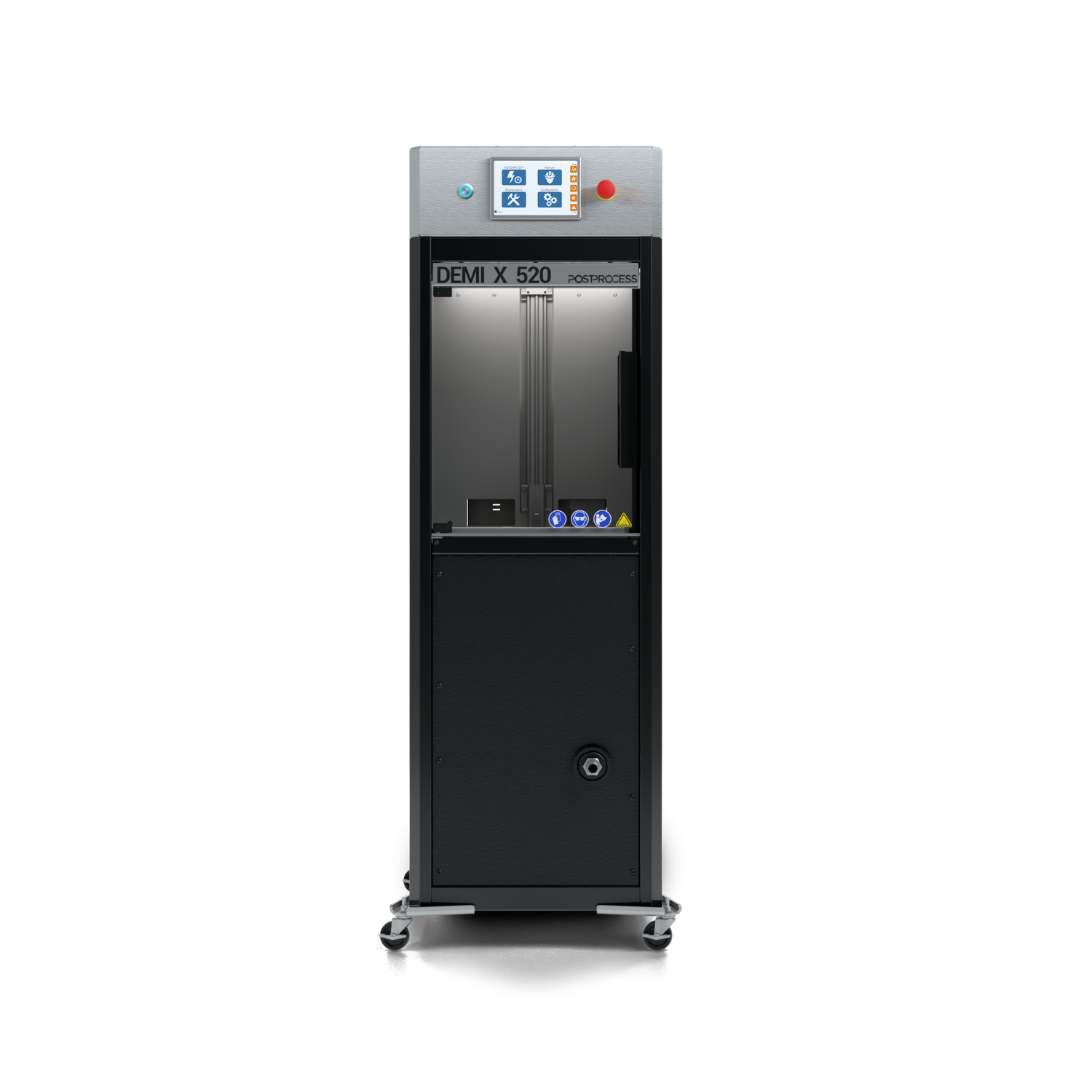
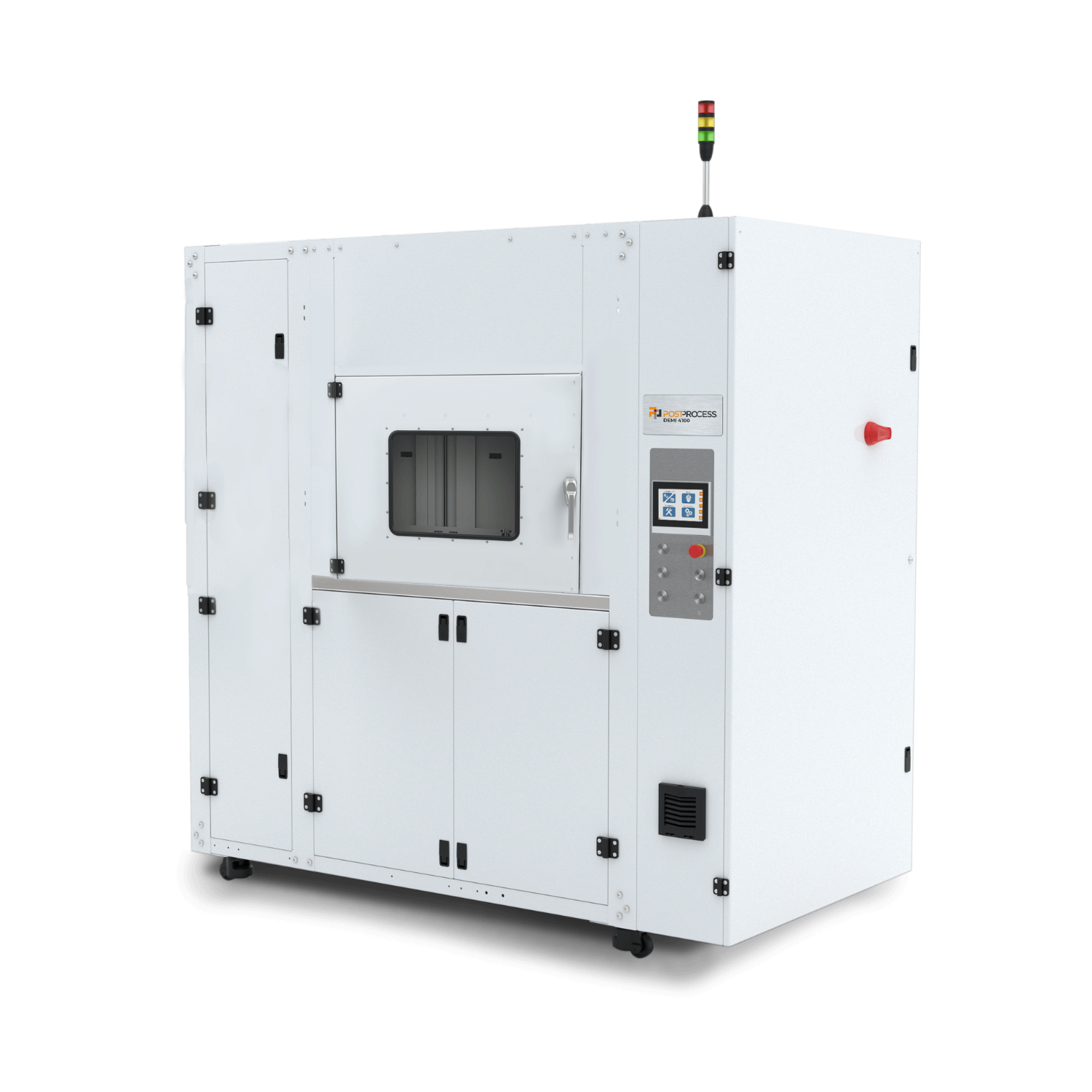
Dallas Martin of Toyota Production Engineering shares how integrating PostProcess BASE™ and DEMI 4100™ solutions with Stratasys 3D printers has become essential to their daily additive manufacturing operations – dramatically reducing FDM drying times from 48 hours to under an hour while improving efficiency, consistency, and overall workflow performance.
FDM Support Removal
Particularly ideal for printing larger, lightweight components, FDM printing is often leveraged for prototyping, tooling, surrogate parts, and the streamlined manufacturing of electric cars. While most FDM support removal solutions significantly increase lead times with long cycle times and extended drying times, PostProcess Volumetric Velocity Dispersion (VVD) solutions use software intelligence and wide part chamber envelopes to effectively post-print large parts and large batch sizes, and reduce support removal processing times by over 50% (compared to submersible tank systems).

Metal Surface Finishing
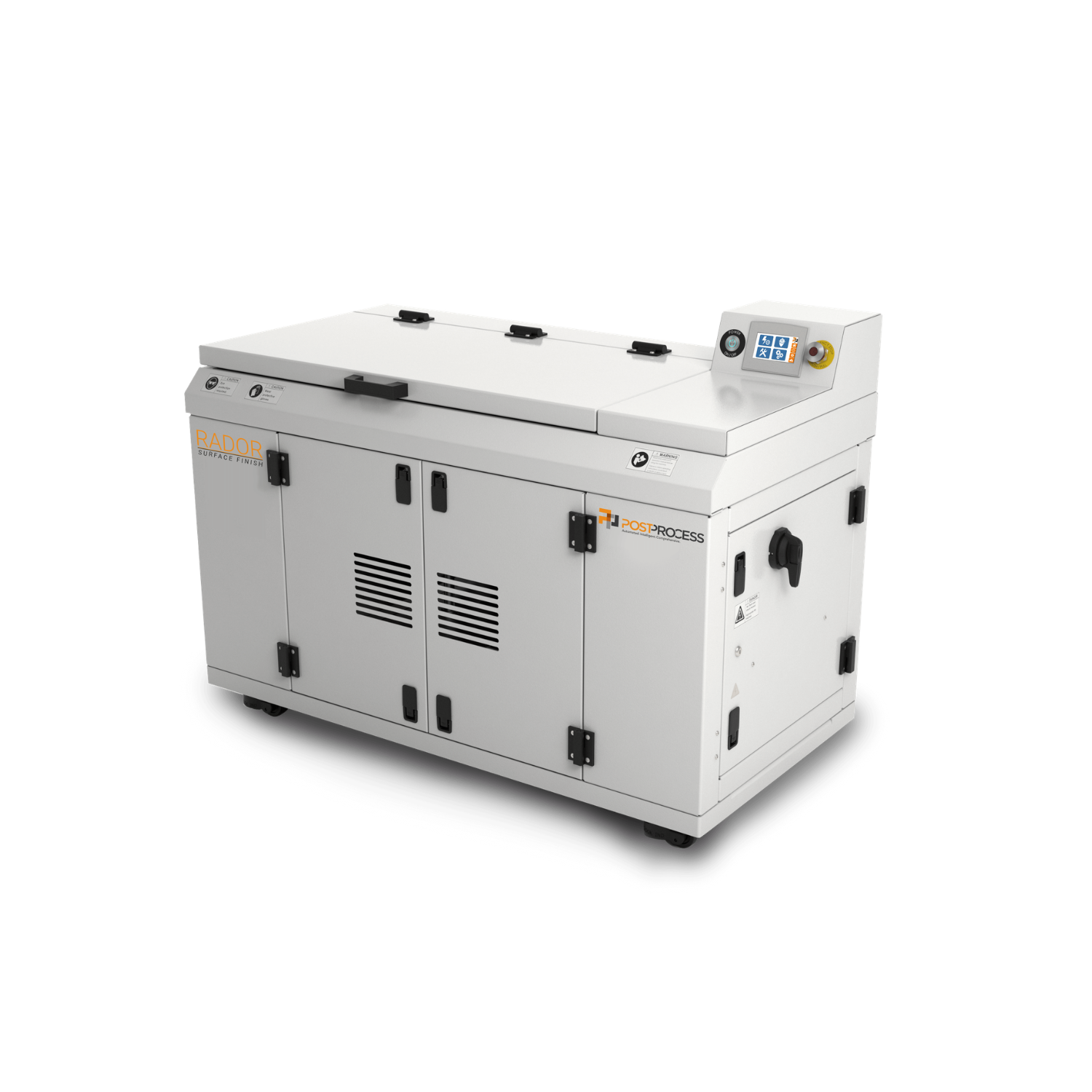
The ability to create a complex metal part in one single build and with minimal material is transformative for the automotive industry. However, traditional metal surface finishing techniques are often too harsh on these printed parts, resulting in burrs, surface flaws, or even scrapped parts. PostProcess’s metal surface finishing techniques are instrumental in achieving ideal Ra values on metal parts with minimal breakage, regardless of the shapes and sizes.

Resin Removal
Because photopolymer processes like SLA, DLP, and Carbon DLS™ are so conducive to printing fine feature details, they are often implemented when creating customized parts in automotive. Unfortunately, chemical hazards are especially notorious in traditional resin removal processes. PostProcess’s automated resin removal solutions feature a proprietary, user-friendly detergent that can finish 5x as many parts as IPA before reaching saturation. These solutions have been proven to enable safer, faster, and more sustainable resin-based workflows.
PostProcess Technologies is the internationally renowned leader and pioneer of automated post-printing. Using patented and patent-pending approaches, PostProcess solutions effectively overcome the post-printing bottleneck with a complete blend of proprietary software, hardware, and exclusive chemistry, enabling complete end-to-end digitalization in additive manufacturing for automotive.