



Environmental, health, and safety (EH&S) are three priorities discussed at the forefront of manufacturing, but what do they really mean for today’s additive workflows?
As additive manufacturing scales, workplace safety is becoming a critical focus, particularly within post-processing operations. From chemical handling to manual part cleaning, these steps introduce risks that can impact not only operators but also overall efficiency, compliance, and scalability.
For many manufacturers, improving post-processing isn’t just about speed or part quality – it’s about building safer, more sustainable, and production-ready workflows.
The Reality & Risks of Manual Post-Processing
Post-processing is essential in additive workflows in order to transform printed parts into finished components. However, many traditional post-printing workflows still rely on manual handling and hazardous chemicals, creating a range of environmental, health, and safety concerns.
Common challenges include:
- Flammable solvents: Isopropyl alcohol (IPA), commonly used in resin cleaning, has a low flashpoint and requires careful handling, storage, and ventilation.
- Operator exposure: Open containers increase the risk of splashing, skin contact, and vapor inhalation, often requiring extensive PPE.
- Manual handling: Repetitive, hands-on cleaning can lead to fatigue, inconsistency, and a higher likelihood of error.
- Chemical management: Solutions like sodium hydroxide require strict controls and disposal procedures.
- Regulatory compliance: Facilities must manage ventilation, storage, and documentation to remain compliant.
These issues have already resulted in workplace accidents, forcing organizations to move away from open dunk tanks and high-risk solvents and to ban these processes in favor of safer alternatives.
A Shift Toward Safer, Scalable Workflows
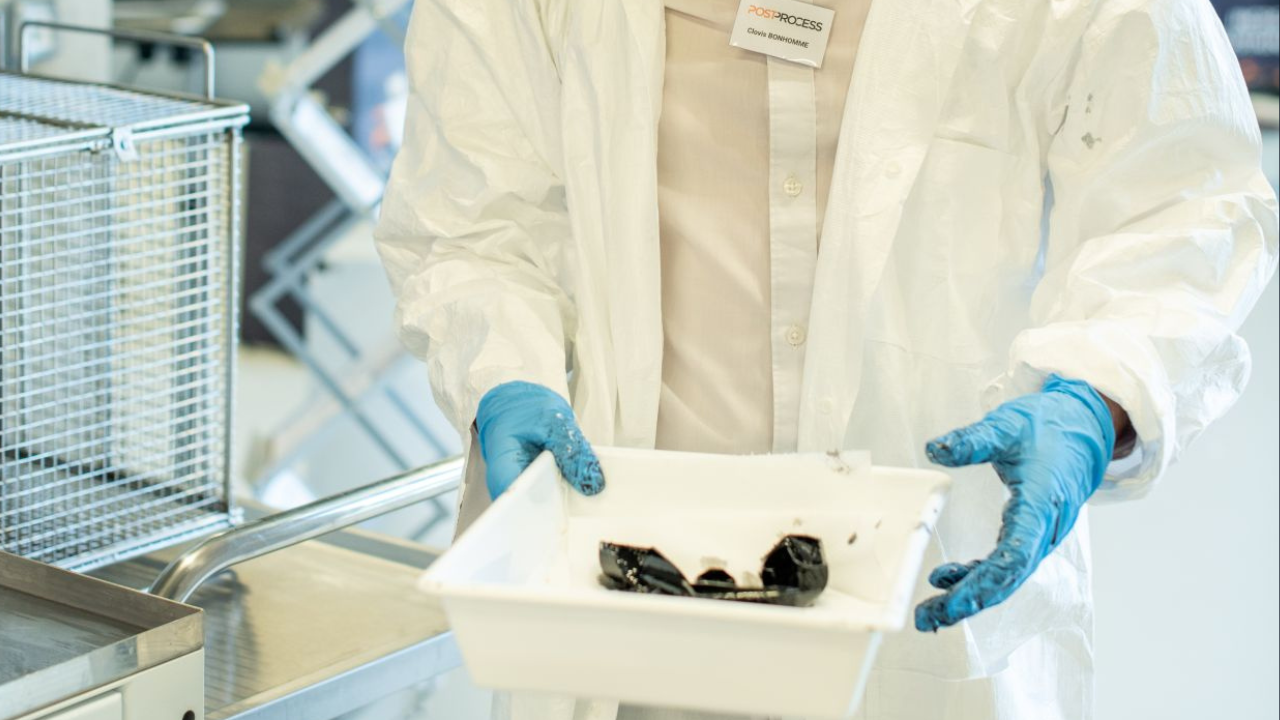 As these challenges and risks become more apparent in day-to-day operations, additive manufacturers are seeking alternatives to traditional post-processing methods. As a critical step in producing production-ready parts, post-processing must be both safe and scalable.
This shift is driving demand for solutions that not only improve efficiency but also reduce operator risk, limit chemical exposure, and deliver more controlled, consistent results.
Moving Toward Automated and Controlled Post-Processing
Automated post-processing solutions from PostProcess are designed to improve both safety and consistency, while also:
- Reducing chemical exposure with enclosed, hands-free operation
- Eliminating flammable solvents by replacing IPA with safer detergents
- Improving consistency through software-driven, repeatable cycles and recipe storage
- Enhancing workplace safety with enclosed systems, interlocks, and controlled environments
- Supporting sustainability goals by reducing waste and extending detergent life
Together, these capabilities create a more controlled, reliable, and consistent post-processing workflow.
The Bigger Picture
Organizations that prioritize EH&S in post-processing are better equipped to grow production, reduce hazardous chemical use, and simplify compliance – while creating safer, more efficient operations.
In today’s additive manufacturing landscape, success isn’t just defined by what you print, it’s defined by how safely and efficiently you finish the part.
Looking ahead, the future of additive manufacturing depends on more than advanced printers and materials. It depends on building end-to-end workflows that are efficient, consistent, and safe.
Want to take a deeper dive into safer, more sustainable post-processing? Download our two-page overview to see how manufacturers are improving EH&S in post-processing today.